This is our second interview as part of the NIHU DH × The DO Interviews. This series features interviews with researchers working at institutions affiliated with the National Institutes for the Humanities exploring different projects, ideas, and initiatives.
This interview was conducted with Prof. Kikuchi Nobuhiko, the Vice-Director of the Center for Data-Driven Research on Premodern Japanese Texts at the National Institute of Japanese Literature. The interview explores Prof. Kikuchi’s research, and his thoughts on the state of digital humanities in Japan, digital history, and the public humanities.
JM: You are well-known in the world of the digital humanities [(henceforth DH)] and perhaps our readers are already aware of your work, but could you briefly introduce your research and suggest and publications that interested readers should turn to if they want to learn more?
KN: My research is broadly divided into three areas. The first is Spanish history, or Western historiography. The second is digital history, or the digital humanities. The third involves research related to public history, or the public humanities.
My doctoral dissertation traced the life of Francisco Pi y Margall, a 19th-century Spanish federalist thinker and politician, while examining the relationship between the historical works published during his time and his political and social ideas. I have compiled this research into a monograph titled Federalism and Historical Perception in 19th-Century Spain: The Life and Thought of Francisco Pi y Margall 『19世紀スペインにおける連邦主義と歴史認識―フランシスコ・ピ・イ・マルガルの生涯とその思想― 』(Kansai University Press, 2022).
Regarding digital history, I am currently conducting research on “Book Day” (Sant Jordi) in contemporary Spain, employing text mining and historical GIS to explore it as spatial history. I have published several papers on this topic. Furthermore, I am deepening my research on this theme by linking it to public history and building a crowdsourced digital archive. Regarding public history and the public humanities, I have recently published an book entitled How to Open the Humanities to Society: Thinking and Acting from the Perspective of the Public Humanities 『人文学を社会に開くには。:パブリックヒューマニティーズから考え・行動する』 (Bungaku Tsushin, 2025).
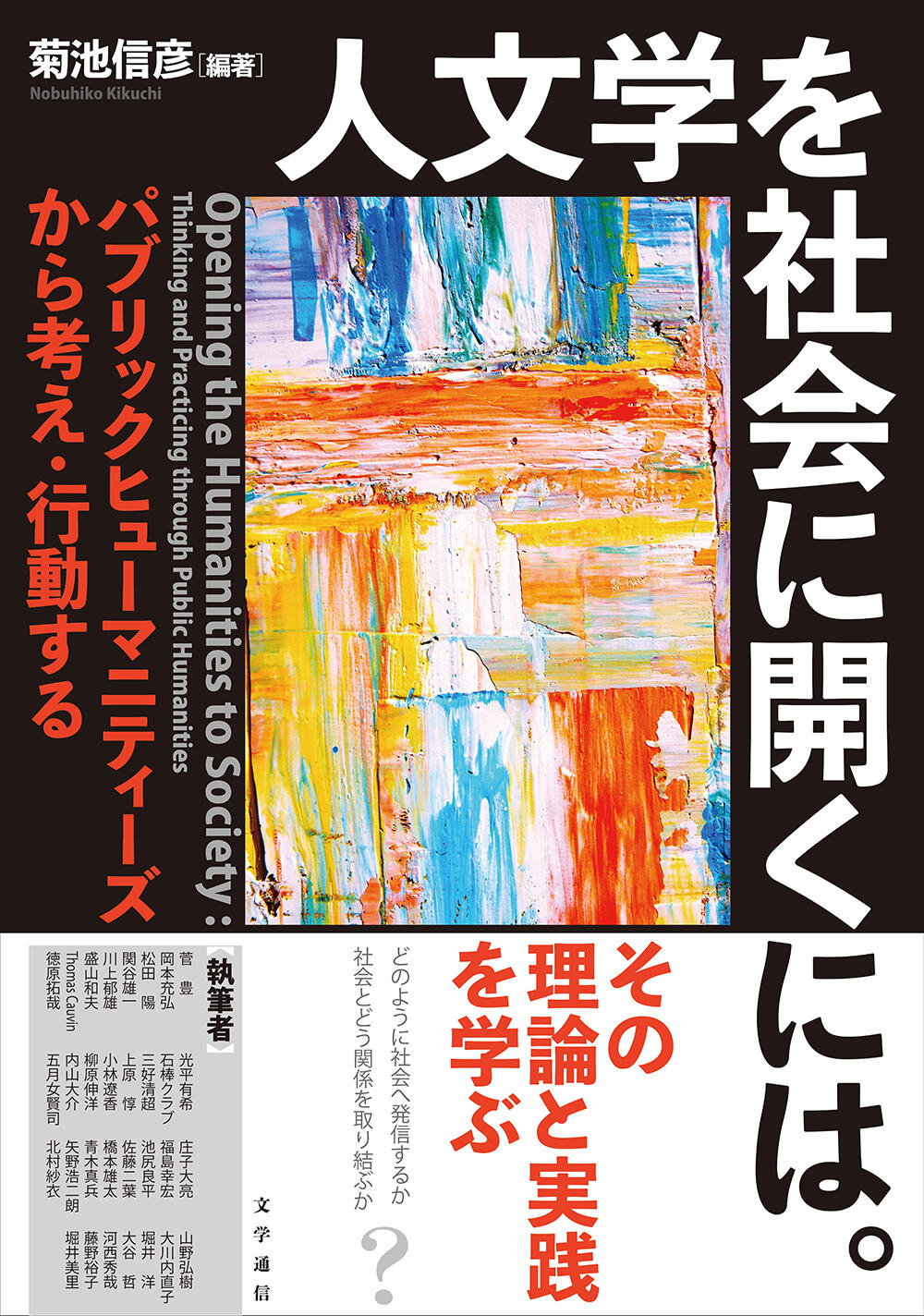
Cover of How to Open the Humanities to Society: Thinking and Acting from the Perspective of the Public Humanities.
JM: As you noted, you recently published How to Open the Humanities to Society: Thinking and Acting from the Perspective of the Public Humanities. Could you tell us about the book, what issues it address, and how it has been received so far?
KN: How to Open the Humanities to Society: Thinking and Acting from the Perspective of the Public Humanities aims to discuss various “Public XYZ Studies”—such as Public History—that have been pursued in the humanities in Japan from a perspective that synthesizes them under the umbrella of “Public Humanities.” It also seeks to gather the voices of practitioners to explore not only the theory, but also the practical ways in which the humanities are being opened up to society. The book has been featured in various contexts, including a book review session held by the Japanese Public History Research Association.
JM: You are engaged in the field of digital history. What are the advantages and opportunities does doing history digitally offer over “classical” methods?
KN: I have two expectations for the methods of digital history. First, it enables us to construct historical narratives based on a huge volume of historical sources that no single person could ever read in their entirety. Second, it holds the potential to open up new avenues for the expression and methods of historical narration. I will talk about these two points a little further.
I believe the first point reflects a familiar concept from “Distant Reading.” In the research leading up to my doctoral dissertation, which I introduced at the beginning, I focused on a single individual, proceeding by reading through the works he had written. However, as my mentor also pointed out, the research on historical perception and the history of historiography that I conducted in that context is a field that is difficult for young researchers to tackle. This is, of course, because research on the history of historiography is difficult without a vast amount of background knowledge. My interest in Digital History stems from the fact that it offers a method for depicting the entire forest—rather than merely imagining it while focusing on individual trees—by keeping the whole forest within one’s field of vision.
The second point is that while historians place great importance on the act of writing history, historical works and academic papers are fundamentally confined to the world of scholars, and are rarely intended for the general public. Although I wouldn’t say that no historians write historical works or papers with the general public in mind, I believe very few do. I find this gap to be a real shame. To bridge it, I feel we need to expand the act of writing history and increase the range of expressive options available, so that we can find ways to convey the fruits of historical research to those who do not typically read such works. With digital history, I believe we can “write” history using different forms of expression—rather than simply producing history books and academic papers that compete solely on the artistry of their narrative.
JM: As you have noted, some of your work focuses on Iberian history. Do you observe different challenges, opportunities, levels of development when engaging with and in digital history in Europe and with European sources in comparison to Japan?
KN: When I first began my research, I faced significant challenges due to a lack of readily available historical sources; however, the subsequent digitization of materials and the launch of digital archives have made it possible to access a wide range of sources without leaving Japan. As a researcher of modern and contemporary history, I find that Europe offers greater convenience for research—not only because a diverse array of media sources (such as newspapers, photographs, and audio recordings) has been made public, but also because there is a growing culture of researchers building and sharing their own datasets. That said, there remain many sources that have not yet been made public and can only be viewed by visiting the sites in Europe, so I look forward to further progress in making these materials accessible. At the same time, I wish to emphasize that “Europe” cannot be treated as a monolith. Much of the methodology and linguistic resources in Digital Humanities (DH) were developed with a focus on major languages like English, French, and German; working with Spanish or Catalan sources reveals that even within Europe, there are “centers” and “peripheries.” In terms of engaging with historical sources and languages outside the scope of tools designed for major languages, the field of digital history in the Iberian Peninsula may actually share a surprisingly similar position to that of Japan.
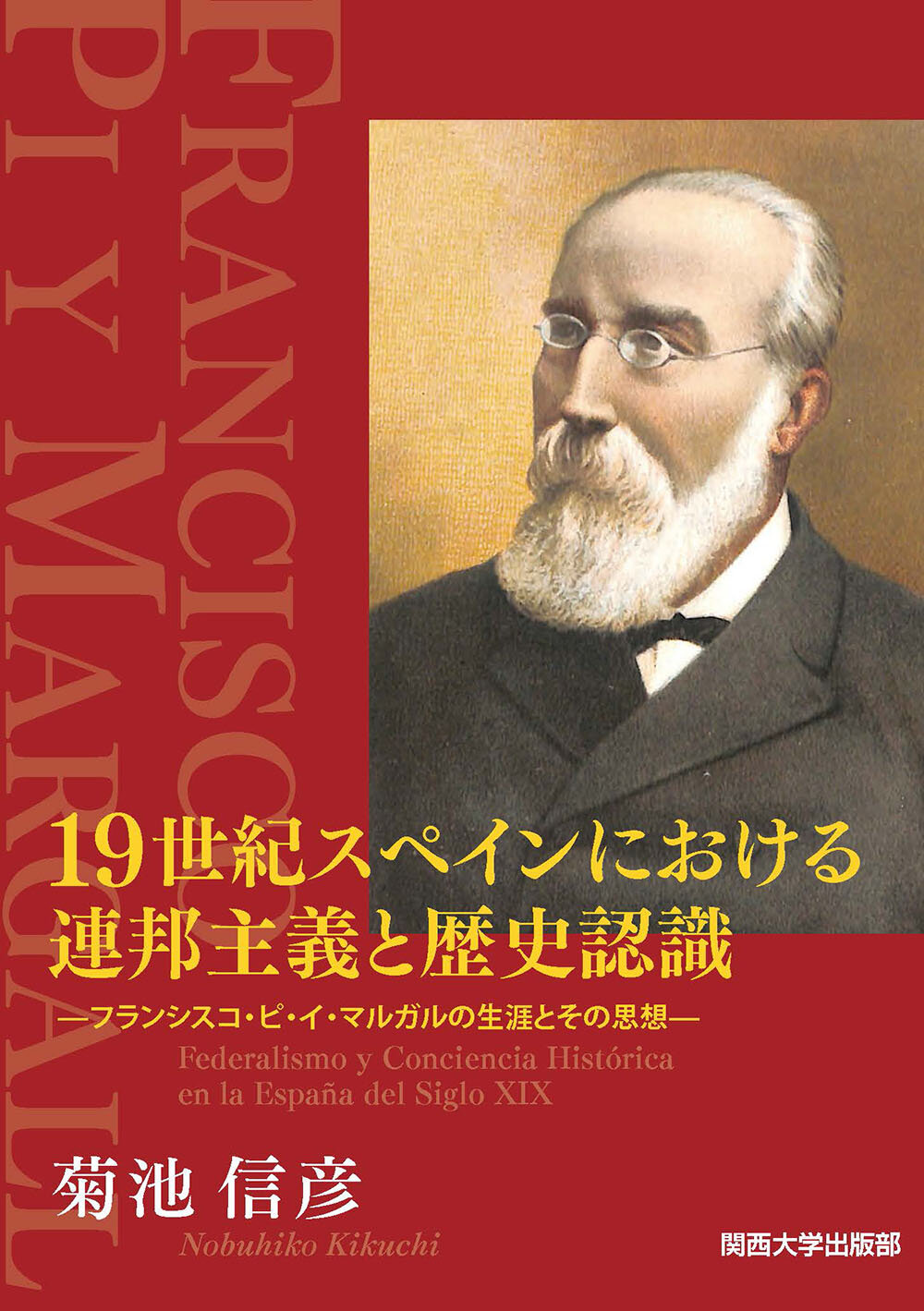
Cover of Federalism and Historical Perception in 19th-Century Spain: The Life and Thought of Francisco Pi y Margall.
Note from JM: The interviewer would like to point readers to the first chapter of Digital Humanities and Religions in Asia: An Introduction, which explores issues of different centers and peripheries within DH and the “unequal” development of DH in different economic and geographic spaces, and critically analyses the development of DH within a Latinate and Anglophone context.
JM: As someone active in DH in both Japan and overseas what lessons do you think different DH communities (those in North America, Europe, and Japan) can learn from each other? Are there any core practices or ideas that you would like to see shared and adopted in other parts of the world?
KN: Before I discuss the concept of “mutual learning,” there is one thing I would like to be honest about. While it goes without saying that Japan has much to learn from North America and Europe, what I am primarily thinking of when I use the term “DH community” is my concern for the Japanese community to which I myself belong.
I am deeply concerned that the Japanese DH community is beginning to take on a certain degree of partisanship. I sometimes sense an atmosphere in which one’s stance or the group to which one belongs casts a shadow over the evaluation of research and even opportunities to participate in discussions and activities. This also means that the “center-periphery” structure I mentioned earlier is now being brought into the community itself. Just as there was a center and a periphery within Europe, I feel that a center and a periphery are beginning to emerge within Japan’s DH community as well.
I consider this a problem because it directly contradicts the principles of open standards and civic participation that DH is supposed to value. Digital methods have the potential to lower the barriers to accessing historical sources and participating in knowledge production, thereby opening up the production of knowledge horizontally—and I believe that is their purpose. However, once they become partisan, they transform into a structure that excludes those who do not belong to the “inner circle.” A field that deals with methods capable of opening up knowledge ends up closing itself off from within—this very perversion is what I fear most.
Everywhere—not just in the DH community—as a community grows in size and becomes more institutionalized, it faces the danger of drifting toward insular logic and exclusion. That is precisely why I believe what North America, Europe, and Japan should share most with one another is not so much individual methods or tools themselves, but rather the practices needed to keep the community open. I believe the health of a DH community can be measured by whether its practices lower or raise the barriers to participation.
JM: Rather than only using digital humanities as a research method, your own work has also highlighted the importance of digital humanities infrastructure, public engagement, and organization development. Over your career how have you seen DH infrastructures, organizational development, and public engagement change? How do you think DH researchers can be better engaged in the public humanities? What sort of issues do we need to be aware of when engaging with the public? And how can these be mitigated?
KN: To be honest, I find that question a bit difficult to answer. That’s because it sounds as if it’s treating DH and the Public Humanities as two separate rooms and asking how to pass through the door between them. However, in my view, the relationship between the two is much more asymmetrical. Digital Humanities can exist without the Public Humanities. There are plenty of research projects that make full use of computational methods while remaining confined to the world of experts. On the other hand, I believe that the Public Humanities—which seeks to co-create knowledge with citizens and lower the barriers to participation—can hardly function today without digital methods and infrastructure. Much of the access to historical sources and crowdsourcing is now mediated digitally. Therefore, the very question of how DH researchers can actively engage with the Public Humanities does not sit quite right with me. Rather than getting involved in the Public Humanities as an afterthought, DH researchers already possess the very tools that make contemporary Public Humanities possible. I believe the real question is whether DH researchers truly find meaning in the ideals of the Public Humanities—namely, opening up humanities knowledge to society and co-creating knowledge with the public. After all, possessing the tools and embracing that philosophy are two different matters. If we attempt to engage with Public Humanities armed only with our methods, we risk merely borrowing the form of what Public Humanities has cherished while stripping it of its substance. I feel this is not so much a criticism of anyone as it is a question we ourselves—as the very people who possess these tools—must constantly ask ourselves.
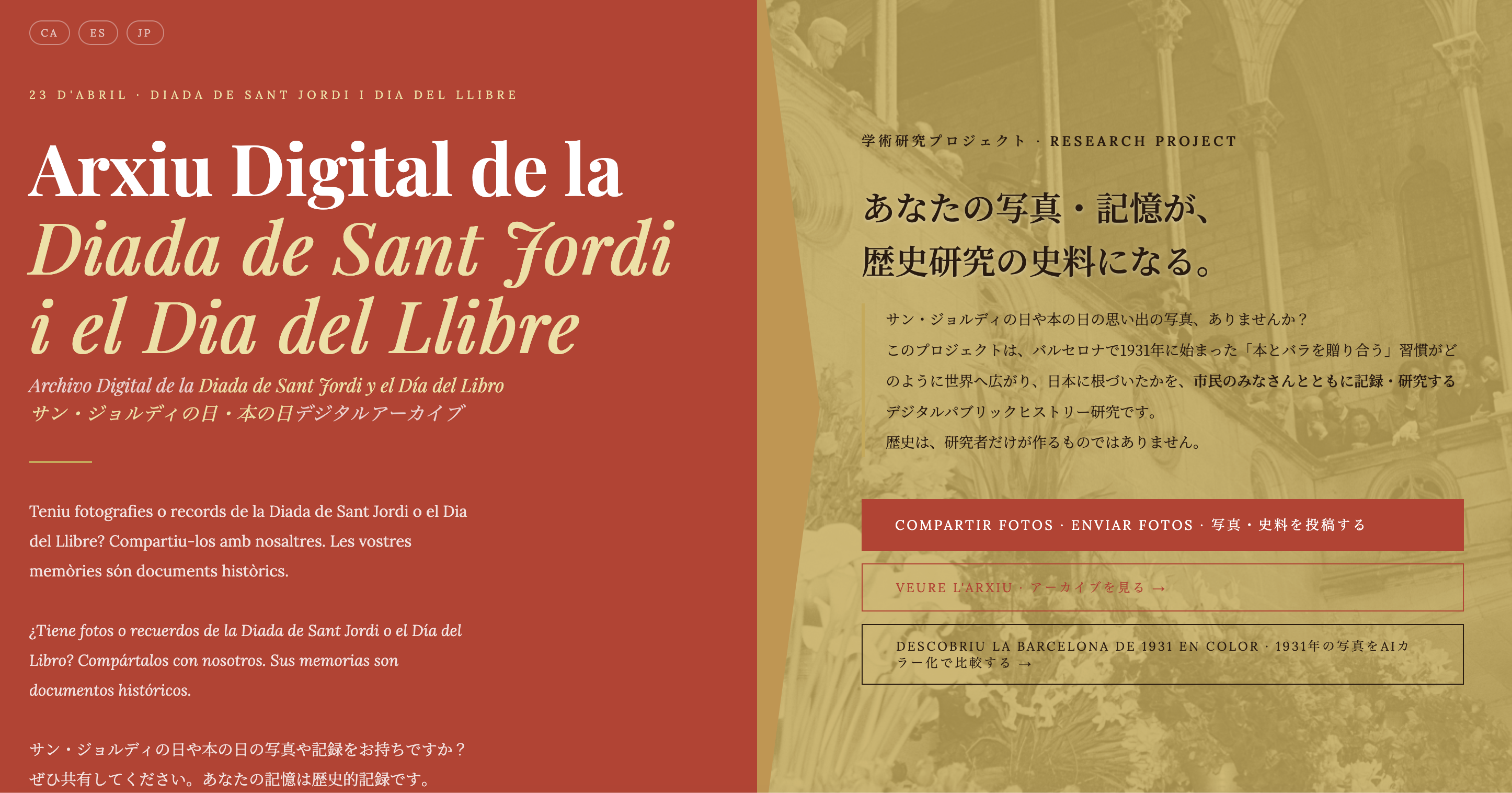
Landing page of Arxiu Digital de la Diada de Sant Jordi i el Dia del Llibre.
JM: Is there anything else you would like to discuss?
KN: Finally, I’d like to make one request of you, the readers.
One of the research projects I’m currently working on traces how “Sant Jordi’s Day” (also known as “Book Day”), which originated in Catalonia, Spain, has been embraced around the world. This festival originated in Barcelona as a tradition of exchanging roses. After “Book Day” was established in 1926, the two celebrations merged on April 23 starting in 1931. Following the Spanish Civil War, the tradition spread to countries around the world through UNESCO’s “World Book and Copyright Day” in 1995. In Japan, however, it began even earlier, in 1986.
In my research, I am currently using crowdsourcing to uncover where and how Sant Jordi’s Day and Book Day are celebrated, drawing on people’s memories and photographs from that era. Therefore, if any readers know how Sant Jordi’s Day or Book Day is (or was) celebrated in your country or region, or if you have photographs or other materials that capture what it was like at the time, I would greatly appreciate it if you could share them with me at the following link:
There are limits to what a single researcher can survey on their own. I hope that bringing together examples and memories across national borders will, in itself, serve as a modest practice of the endeavor to open up knowledge horizontally—an endeavor I have been discussing in this interview.
AI Disclosure: ChatGPT was used to create the cover image for this post.